What backtesting is, and what it isn't
Backtesting means checking how a set of trading rules would have done on past data. Here's what it can tell you, what it can't, and the two ways to do it.
- What a backtest is, in plain terms
- The questions it can and can't answer
- The difference between automated and bar-replay backtesting
- Four rules that keep results honest
Backtesting in one sentence
Backtesting is trading your rules on past market data to see how they would have done, before you trust them with real money.
That's it. Everything else, the tools, the statistics and the journaling, exists to make that answer believable.
What it tells you
- Whether there's an edge at all. After enough trades, does the setup make more than it loses, after fees?
- What to expect. Your win rate, your average win and loss in R, and how deep a losing streak normally gets. Knowing a 6-trade losing run is normal stops you quitting a good strategy on a bad week.
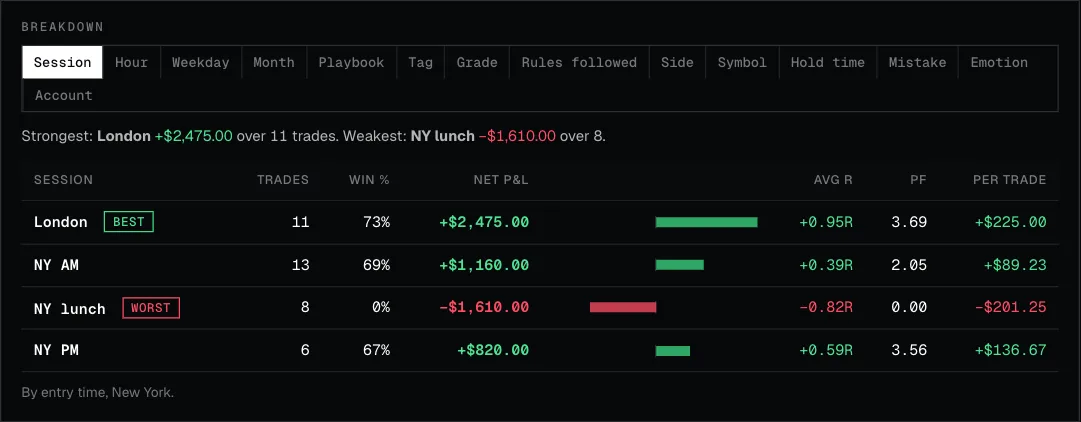
- Where it works. Which sessions, hours and conditions the setup likes, and which ones it hates.
What it can't tell you
- The future. Markets change. A backtest is evidence, not a promise.
- How you'll feel with money on the line. Replay removes the fear, which is great for learning and the reason you still start live trading small.
- Anything about rules you keep changing. If you tweak the rules after every losing trade until the results look good, you've fitted the past, not found an edge.
Two ways to backtest
Automated: you write the rules so precisely that software can trade them, and it runs years of data in seconds. Fast and objective, but only for strategies that can be coded.
Bar replay: you step through the chart one candle at a time with the future hidden, and take the trades yourself. Slower, but it tests strategies that rely on reading the chart, and it tests you. That's what Wickform is built for. Our TrendSpider comparison goes deeper on the difference.
Keep it honest
- Hide the future. Never look ahead before deciding. Use blind drills, where even the date is hidden, to check yourself.
- Use realistic fills. Include fees and slippage, and don't assume the best outcome when a candle hits both your stop and your target.
- Take enough trades. Aim for at least 30 before reading too much into the numbers, across more than one month.
- Record everything. Every trade, including the ugly ones, with the rules you followed.
- A backtest answers one question: would these rules have worked?
- It shows edge, expectations and conditions, not the future.
- Hidden future, real fills, enough trades and a full record keep it honest.